
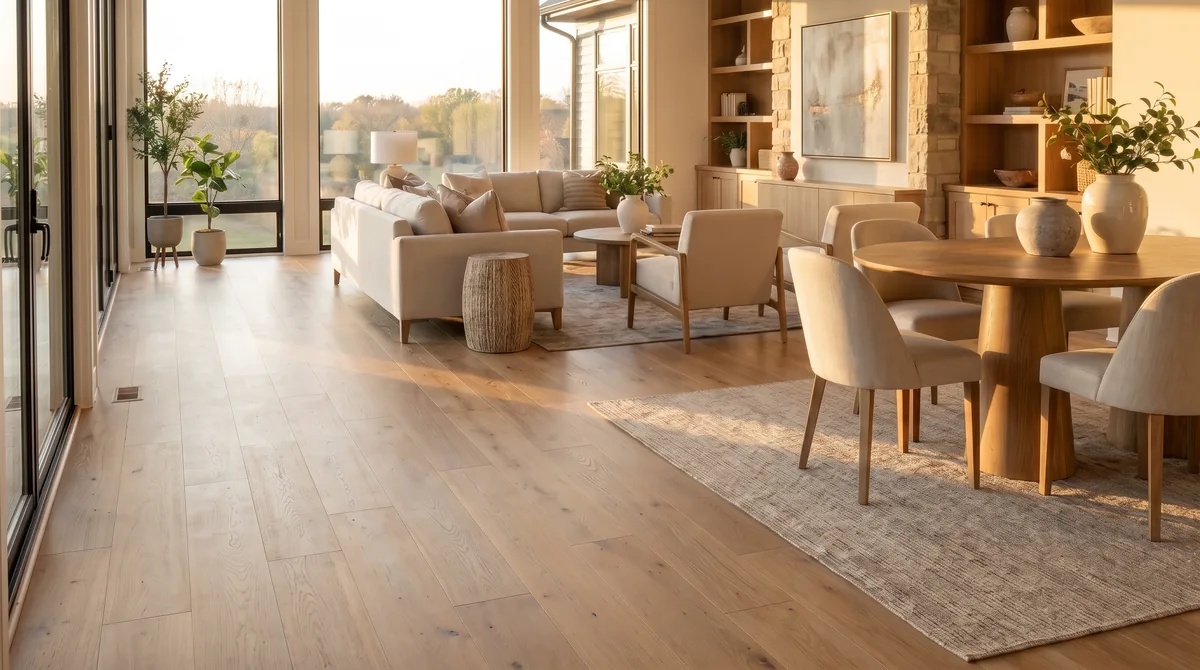
Hardwood
Solid, real wood — the floor that outlives trends, gets refinished instead of replaced, and adds value you can measure.
The forever floor.
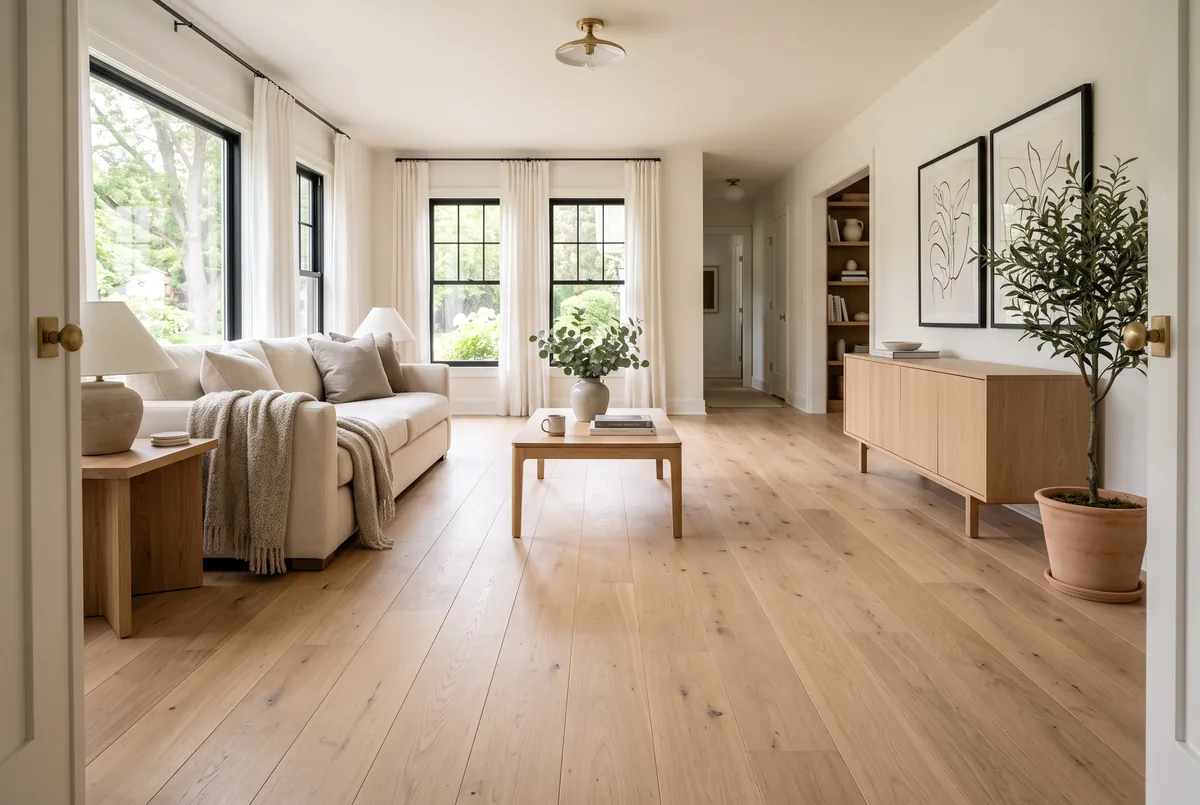
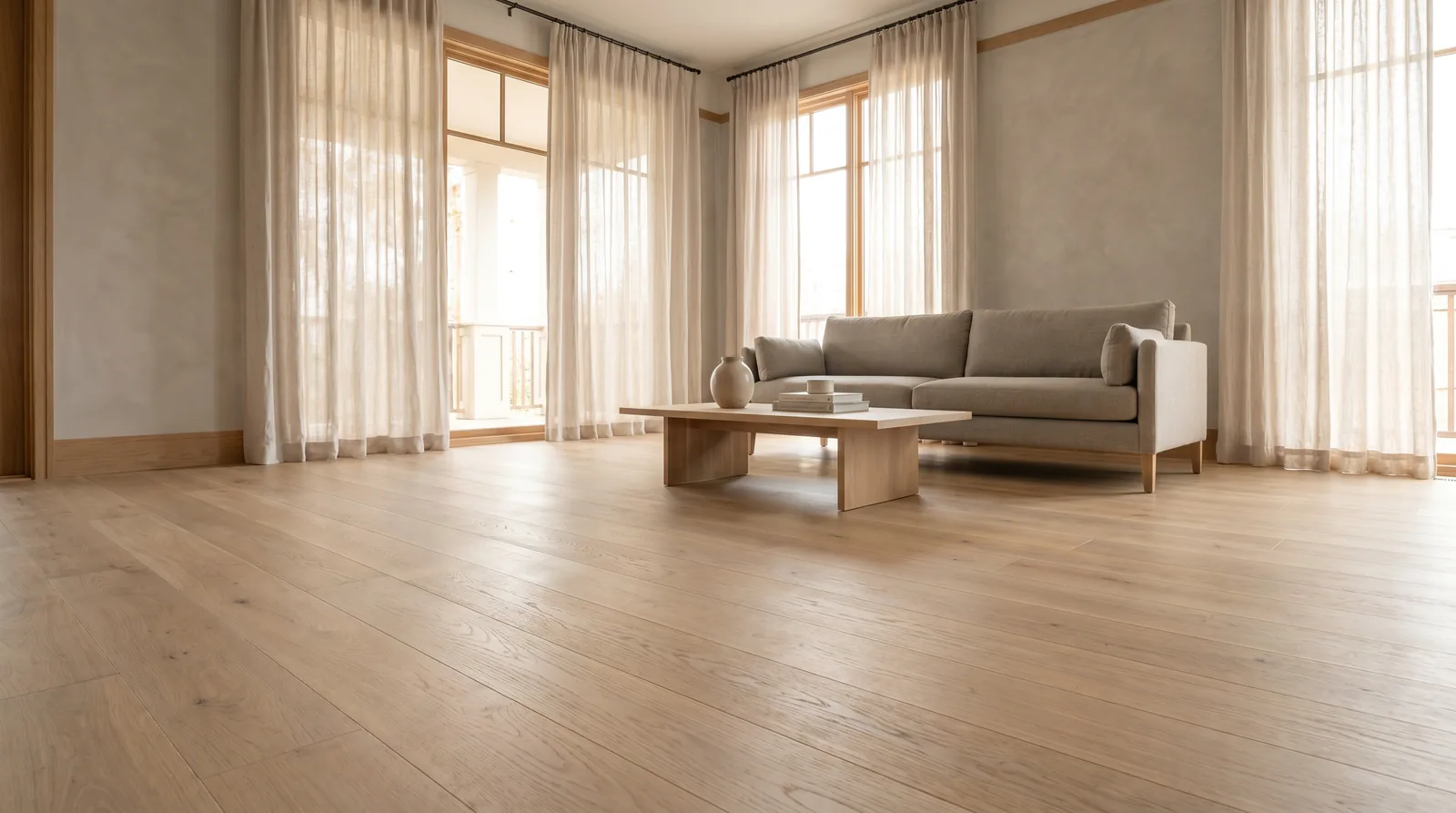
Nothing else ages like solid hardwood. Scratches become character or sand away entirely; styles change and the same boards take a new stain. A well-installed oak floor is routinely the last floor a house ever needs — and appraisers notice.
We install solid hardwood in the species and cuts that suit your rooms — white oak and red oak most often, wide plank or classic strip, prefinished from the factory or sanded and finished on site for that seamless custom look.
How we install it
Wood moves with moisture, so the job starts with a meter, not a nail gun. We check subfloor and material moisture, let the wood acclimate to your home, then nail it down over properly prepped subfloor. Rushing this step is how floors gap and cup later — so we don't.
Where hardwood shines
- Genuine solid wood, decades of service life
- Can be sanded and refinished many times
- Timeless looks that help resale value
- Repairs blend in — boards can be replaced or re-stained
Honest considerations
- Moves with humidity — steady indoor climate matters
- Not for below-grade basements or wet rooms
- Can dent under heavy impact (that's real wood)
- Higher upfront cost than look-alike floors
Prefinished or site-finished?
Prefinished installs faster with a factory-tough finish; site-finished gives a smooth, custom, seam-sealed surface and unlimited stain choice. Both are great — we'll talk through which fits your timeline and taste.
Can hardwood go in my basement?
Solid hardwood shouldn't go below grade — ground moisture moves it too much. That's exactly what engineered flooring is for, and we'll tell you so rather than sell you a problem.
Invest in the floor that lasts.
Free hardwood estimates across the metro.
Why do gaps appear in my hardwood in winter?
Because Minnesota winter air is dry. Wood releases moisture and shrinks, then swells back in summer, so thin seasonal gaps are normal and usually close on their own. Running a humidifier to hold indoor humidity around 35–50% keeps that movement small.
How long does a hardwood install take?
Plan on three to five days for a typical main level, plus acclimation time before we start — the wood needs to sit in your house and settle to its humidity first. Site-finished floors add several more days for sanding and finish coats.
Can hardwood be refinished, and how many times?
Yes, and it's hardwood's great advantage. A solid ¾-inch floor can usually be sanded and refinished four to six times across its life, which is why a well-installed hardwood floor can outlast several owners.
Does hardwood work over radiant heat?
Sometimes — but engineered is usually the safer answer. Solid wood over radiant can be done with tight humidity control and careful species selection, and we'll walk you through the tradeoffs before you commit to it.