
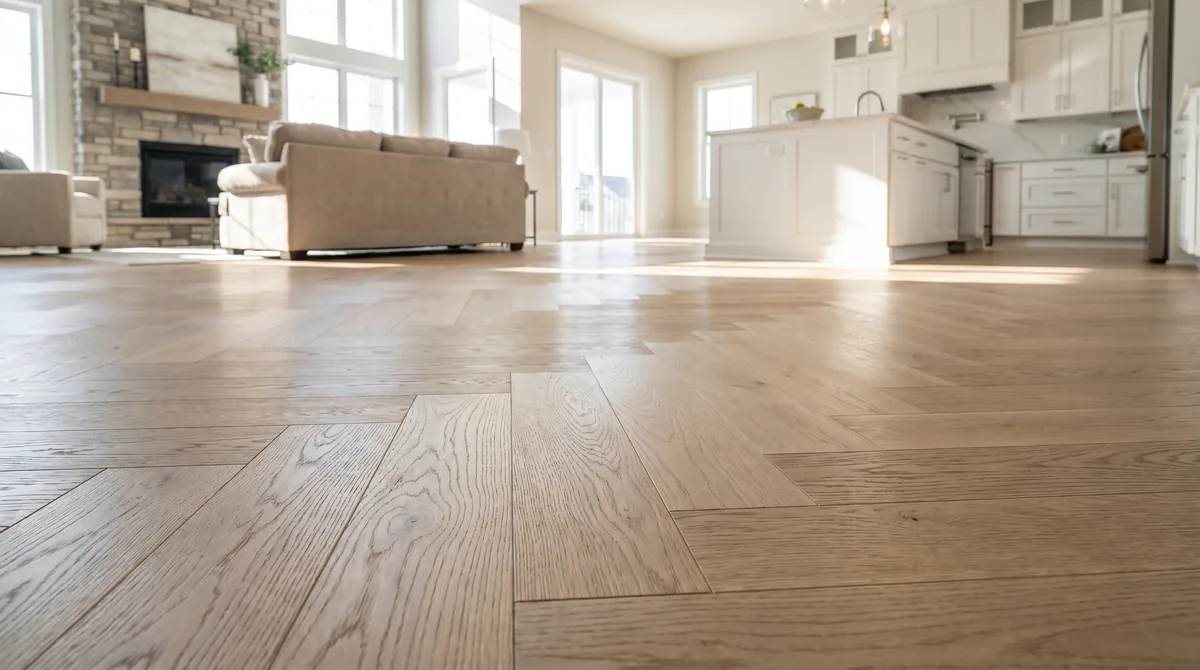
Engineered Flooring
Real hardwood on a stability-engineered core — wood where solid wood can't go, in planks and patterns solid wood struggles to match.
Real wood, engineered smarter.
Engineered flooring is genuine hardwood — a real wood wear layer bonded to a cross-ply core that barely moves with humidity. That stability is the superpower: it opens up concrete slabs, basements, and rooms with in-floor heat, and it makes extra-wide planks and herringbone patterns behave.
The wear layer is the spec that matters. A generous one can be sanded and refinished down the road, much like solid wood; a thin one can't. We'll show you the difference and match the product to how long you want this floor to serve.
How we install it
Depending on the product and subfloor, engineered floors float, glue, or staple down. Over concrete we test for moisture first and use the right barrier or adhesive system — the quiet, solid feel of a good engineered floor is decided right there.
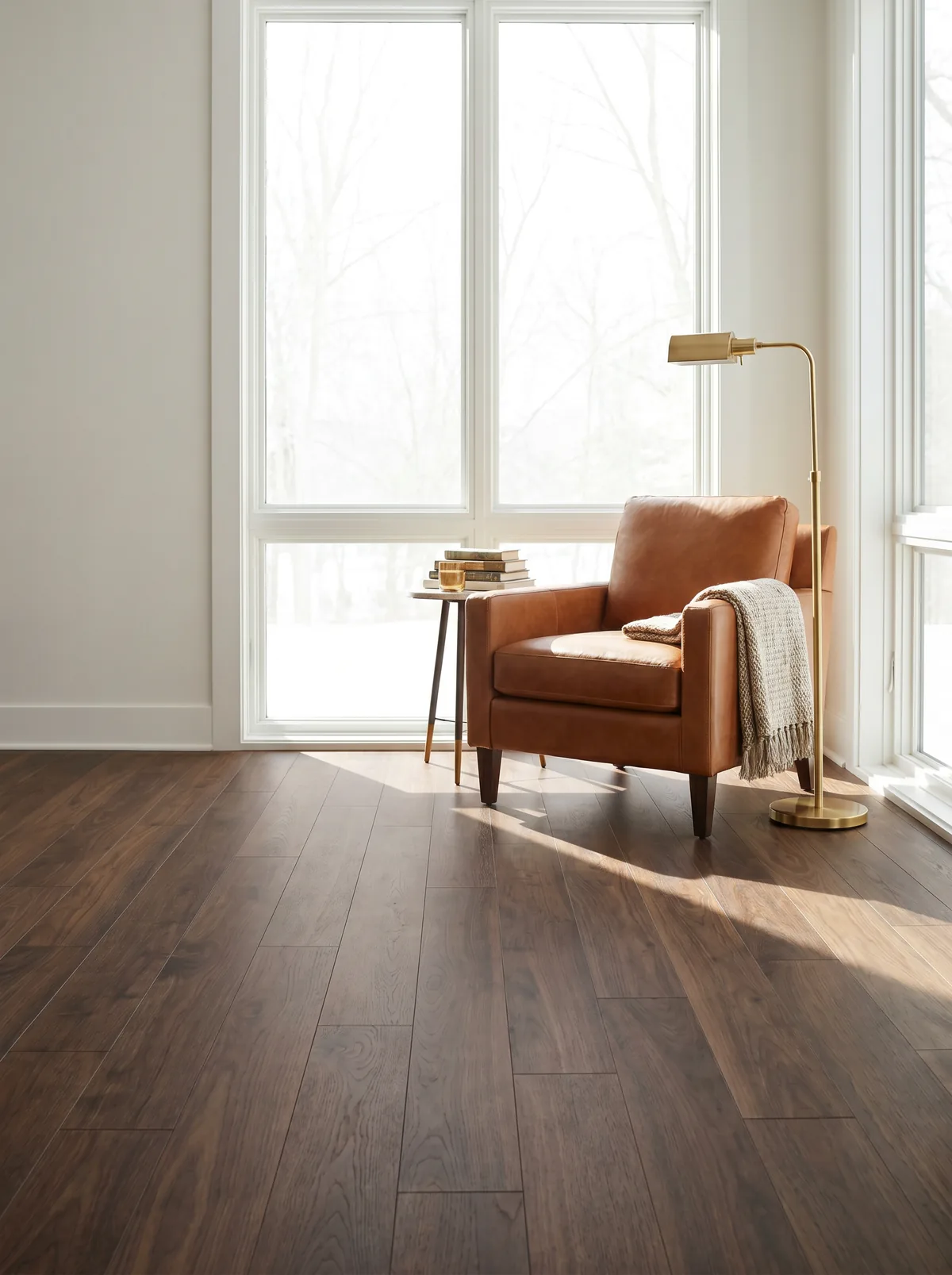
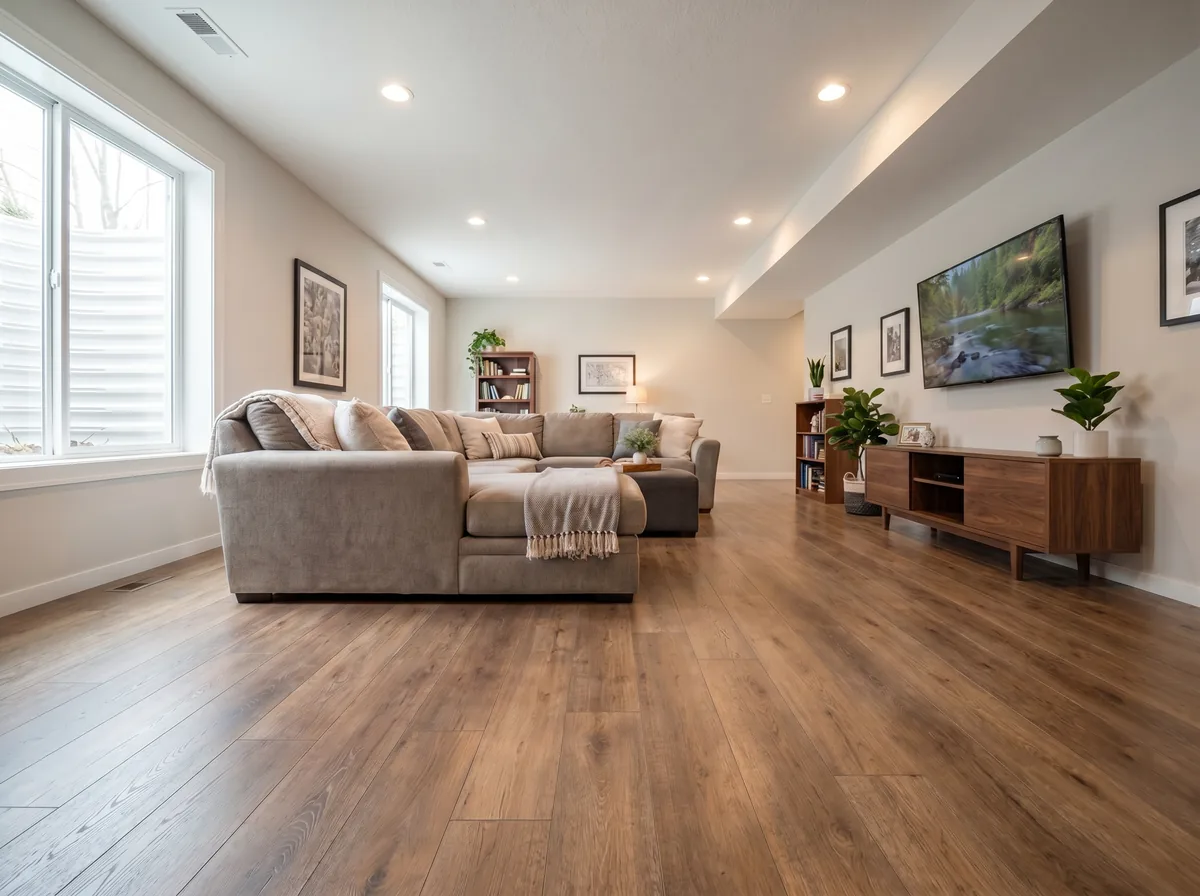
Where engineered shines
- Real hardwood surface, superior stability
- Goes where solid can't — slabs, basements, radiant heat
- Wide planks and herringbone without the drama
- Quality products can be refinished
Honest considerations
- Thin wear layers can't be sanded — spec carefully
- Quality range is wide; the core matters
- Deep gouges can reach past the wood layer
- Costs more than laminate or LVP look-alikes
Is engineered "fake" hardwood?
No — the surface you walk on is real hardwood. The engineering is underneath: a layered core that resists the seasonal movement solid wood is prone to.
Engineered or solid — which should I pick?
Main level over a wood subfloor and planning to stay decades? Solid is hard to beat. Concrete slab, basement, radiant heat, or a love of wide planks and patterns? Engineered wins. We'll give you a straight answer for your exact rooms.
Wood, wherever you want it.
Free engineered-flooring estimates across the metro.
Can engineered flooring go in a basement?
Yes, and it's one of the main reasons to choose it. The cross-layered core is far more stable than solid wood against slab moisture and the humidity swings you get below grade. We still test the slab and use the right moisture barrier.
Can engineered wood be refinished?
Once or twice, depending on the thickness of the wear layer — a thicker top layer buys more refinishes. If you want a floor that can be sanded repeatedly across decades, solid hardwood is the better pick.
Does engineered work with radiant heat?
Yes, and it's the usual recommendation for it. The stable core handles heat cycling far better than solid wood. We confirm the manufacturer's rating for the specific product before installing over radiant.
Is engineered a good fit for Minnesota humidity swings?
It's the most forgiving real-wood option here. Between dry winters and humid summers, indoor humidity in Minnesota can swing enough to move solid wood noticeably; engineered's layered construction resists that seasonal change.